
 Location:
 Addtime:
2025-02-15
Addtime:
2025-02-15 Clicks:391
In the competitive coffee industry, packaging is more than just a container—it’s a critical tool for preserving freshness, enhancing brand appeal, and
meeting sustainability goals. Flexible plastic packaging offers versatility, cost-effectiveness, and advanced barrier properties. However, selecting the right
material requires balancing technical requirements, environmental concerns, and consumer expectations. This guide outlines key considerations for coffee
producers.
1. Key Requirements for Coffee Packaging
Coffee packaging must address three core challenges:
Oxygen & Moisture Barrier: Prevents oxidation and moisture absorption, which degrade flavor and aroma.
Light Protection: Blocks UV light to avoid photo-oxidation.
Sustainability: Meets recyclability or compostability demands while maintaining functionality.
2. Common Flexible Plastic Materials for Coffee Packaging
A. Mono-Materials vs. Multi-Layer Structures
Mono-Materials (e.g., PE, PP):
Pros: Easier to recycle; lightweight.
Cons: Limited barrier properties; may require thicker layers.
Ideal for: Short-shelf-life products or brands prioritizing recyclability.
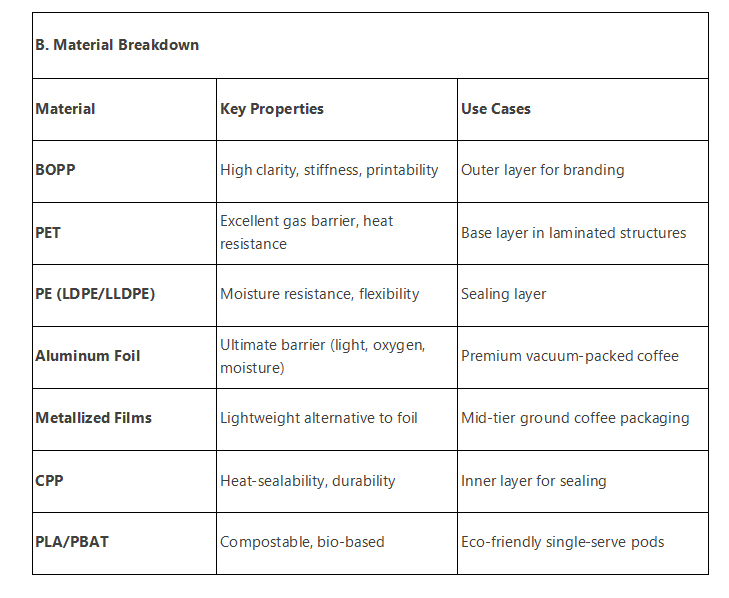
Multi-Layer Films (e.g., PET/AL/PE, BOPP/MET/CPP):
Pros: Superior barrier performance (oxygen transmission rate <1 cc/m²/day).
Cons: Complex recycling; higher cost.
Ideal for: Premium or long-shelf-life coffee (e.g., whole beans, specialty blends).
B. Material Breakdown
3. Sustainability Trends Shaping Material Choices
Recyclable Designs: Shift toward mono-material structures (e.g., PE-only pouches) compatible with existing recycling streams.
Bio-Based & Compostable Films: Materials like PLA (from corn starch) or PBAT blends for compostable coffee pods.
Post-Consumer Recycled (PCR) Content: Incorporating 30-50% PCR resin into outer layers to reduce virgin plastic use.
Example: European brands now favor PET/PE laminates with >50% recyclable content to comply with EU packaging regulations.
4. Case Studies: Matching Materials to Coffee Types
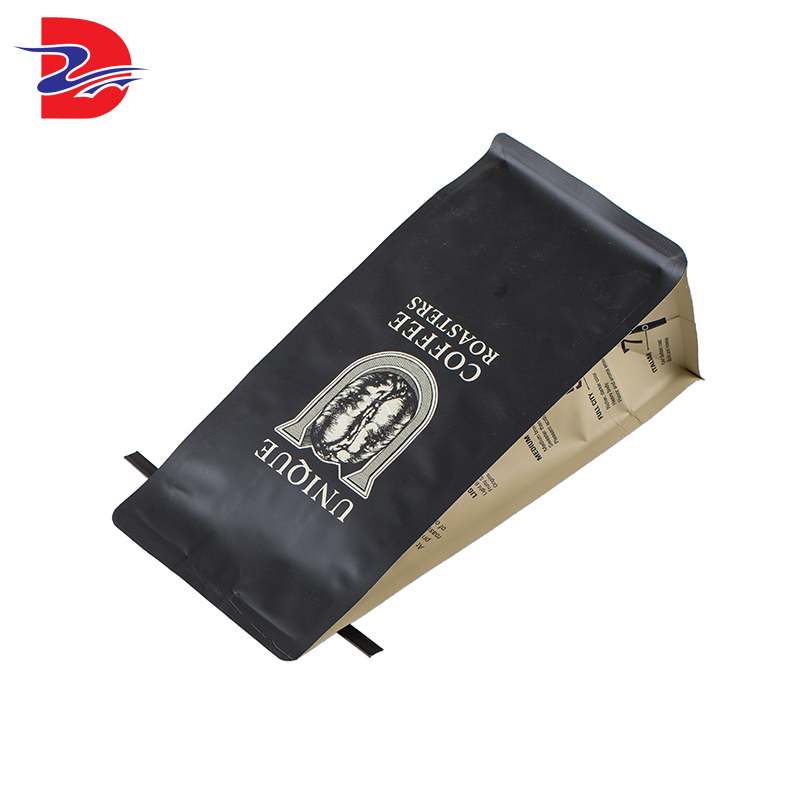
Whole Bean Coffee:
Structure: PET/AL/PE (high barrier, block light).
Features: Degassing valve for CO2 release.
Ground Coffee (Retail):
Structure: BOPP/MET/PE (lightweight, printable, moderate barrier).
Single-Serve Pods:
Material: Compostable PLA/PBAT blends or recyclable PP.
5. Partnering with Suppliers: Critical Questions which you need to ask?
What is the oxygen transmission rate (OTR) and water vapor transmission rate (WVTR) of the proposed material?
Does the structure align with regional recycling infrastructure (e.g., How Recycle labels)?
Can you provide certifications (e.g., BRC,ISO TUV compostability)?
Conclusion
Selecting the right flexible plastic packaging for coffee requires a balance of science, sustainability, and consumer psychology. By prioritizing barrier performance, recyclability, and brand storytelling, coffee producers can protect their product’s quality while aligning with global environmental goals. Always test materials under real-world conditions and collaborate closely with packaging experts to innovate.
Need a customized solution? Contact us to discuss your coffee packaging challenges!
